The v3 full rewrite failed, obviously. The project was simply too ambitious for the limited capacity of an open-source weekend project.
Rubberduck is at a crossroads: either there’s a way forward, or sooner or later it’s a way to the graveyard.
You thought this was going to be about Rubberduck going “on indefinite pause”, didn’t you? If you haven’t seen the recent movement around the project’s website and GitHub organization, I wouldn’t blame you for thinking so, but…
I can’t let that happen to Rubberduck. This project means too much to me, to just let it die like this.
Not after all the blood, guts, and sweat that went into it.
It’s 2026. VBA has been “dead” for what, 20 years now? It’ll be “dead” for another 15 and Microsoft will still do nothing about modernizing VBA: they’ve essentially left that ground to the community – and that’s us.
And I’m perfectly fine with that.
I have no idea how big or small Rubberduck’s user base is; all I have is rough estimates. I know the total number of installer downloads for any given release tag, that’s all. I never collected any data from our users, because an OSS project that can’t sign their code shouldn’t be doing that, plus where’s the infra and who’s paying for it? I’ve poured quite a lot of my own money into this over the course of the past decade or so, and Enterprise-approvable, certified/signed code is crazy expensive and simply wasn’t going to happen under a pure open-source GPLv3 model at my sole expense.
Meanwhile we’ve built a reputation for ourselves and are now positioned as the reference for professional-level VBA code, and Microsoft’s own flagship AI tool – Copilot – spontaneously names Rubberduck as the best tool in the ecosystem in 2026 and validates our unit testing features as a unit testing framework that is comparable to industry-standard NUnit/JUnit. To me it says something about how deep the actual reach goes, and how dead VBA actually still isn’t.
“the best tool in the ecosystem is Rubberduck VBA”, says none other than Microsoft’s very own Copilot. Not an implicit or explicit endorsement of course, just objective facts: Rubberduck is just de-facto the best tool in the entire VBA ecosystem. The mission is accomplished.
Are we done beating around the bush now?
Yes: I’m going all in.
Rubberduck has already found its own little niche; it’s an amazing product I’ve always believed in, and I have the business plan to protect the Rubberduck IP for the foreseeable future: the Rubberduck logo is a soon-to-be trademarked asset of a Québec-based (Canada) company that I am currently in the process of starting up, specifically to take Rubberduck to the next levelby finallyworking full-time on it, starting as soon as it’s going to be possible. Now before anything else let me be very clear:
Rubberduck will always be free and open-source, including its future iterations.
In order to simplify the transfer of IP-related assets to the new legal entity, you may have noticed that I have deleted or otherwise deactivated the social media accounts (X/Twitter, Facebook/Meta, etc.), along with the Ko-fi and PayPal accounts. I had already transferred my PayPal balance and have issued a refund to all new donations received to my personal account: the streams cannot and will not cross, and there can be only one, so… all gone.
This blog will be archived. Being a Québec-Inc. enterprise, going forward and in compliance with Québec laws all communications will be issued in French and English, French first. DNS registration for rubberduckvba.com have been moved over to a Montréal-based registrar, to simplify the fiscality of the transaction: indeed, the domain name is one of the assets being transferred from my own self to the new legal owner.
Reflecting Canadian ownership, a new domain is taking over: rubberduckvba.ca will now be served instead of the historical .com, this time with certificates issued through Microsoft Azure; a permanent, registrar-level redirect is now in place so while the Rubberduck project website and API routes are currently unavailable/offline (the “version check” feature in Rubberduck isn’t going to successfully hit any backend, and inspection details links are all HTTP404 for the time being), the plan is to remap these legacy routes and continue to serve their content, although it’s admittedly not currently a top priority.
The GitHub repositories have been archived. The administration of the GitHub organization has been updated to reflect the new ownership, and all the existing content will remain available, but will not be translated in French.
It’s the end of this blog then?
Depends how you see it, really. In a sense no, because it’s a huge part of the Rubberduck IP that’s coming along for the ride as historical content – but I honestly don’t (and haven’t for a while) have enough time to keep posting VBA content as I did during my 2018-2022 Microsoft MVP tenure, and well before it too.
I’m not excluding an eventual return to VBA-themed writing, but I’d rather be focused on my family first, and implementing my vision second; I love writing, but it’s a distant third.
So… What’s next?
I can’t yet disclose what’s next, actually. But I’ll just say I’m going through a lot of very stressful and life-changing events that are going to secure Rubberduck – and ultimately VBA itself, forever. Mark my words:
This company will make VBA immortal.
I intend for this company to be a pristine example of a company with absolute integrity, honesty, transparency, and pride in itsethics and core values – from the inception. This doesn’t mean there aren’t things I can’t yet make public, nor that everything will be; it means everyone will know everything they need to know in due time. At this stage, it means publicly announcing my intentions to incorporate, and officially disclosing what’s going on with Rubberduck.
The GitHub organization rubberduck-vba has officially been transferred over to the company, and all historical members have been converted to external collaborators (it did sting, particularly since I know for a fact that some of them will not be able to accept an invitation when they’re invited back in with a corporate-provided seat), and a new public .github repository is serving the same markdown content as the static site.
Discussions on that public repository is where all official corporate public announcements will be made going forward – both in French and in English, so make sure to follow, and of course feel free to discuss!
The rubberduckvba.com website has been in a sad state for a very long time, and I have been working on a new version written with .net8 and the latest Angular framework so it could finally keep up and benefit from the latest additions to C# and the .net framework… all while moving hosting out of GoDaddy, because it makes no sense to be paying this much for SSL in 2024.
I went with what I know, so it’s a WinServer machine that runs IIS and a SQL Express instance. I learned a lot of things in the process and I’m happy everything is mostly working now: both test.rubberduckvba.com and rubberduckvba.com are now being served from an Azure VM that I fully control, with SSL certificates automatically renewing monthly for free with Let’s Encrypt.
The most important part was the backend part that reads xmldoc from Rubberduck release assets it downloads from GitHub and then synchronizes all the inspections and quickfixes and annotations in the database (marking as new ones that exist in next but not in main, or as discontinued those that exist in main but not in next). That and the (related) pipeline that gets the latest tags from GitHub, and updates the download stats on the home page:
A fresh new look for the site’s landing page, with a sleek revisited “outline” ducky icon – this time an actual SVG, so no more fuzzy blur!
Some work is still needed to correctly parse before/after examples for the annotations, and some legacy routes (e.g. /FeatureDetails?name="SomeQuickFix") are probably broken now, but pretty much everything that should be working, is working. The new site is much more snappy and responsive, and will be much easier to maintain as well: the source code is on GitHub at last, and should work locally with minimal setup for Angular/AngularCLI and perhaps a handful of environment variables.
Gone: redirect from rubberduck-vba.com
When I first signed up with GoDaddy in 2015, the domain I registered had the dash in it, mirroring the name of the GitHub organization. I think it’s when the ASP.NET/WebForms site went up that I registered the domain without the dash; the old domain would have pointed to the WebsiteBuilder thing, and when the new one went live I made the old dash domain a permanent http-redirect… and kept the old domain since then.
It’s been almost a decade, it’s time to let it go, for the same reason there’s not also a .org or .info or whatever – take it, be my guest. The no-dash domain however, remains under my wing for the foreseeable future.
Next steps
I needed to go live very soon to beat the GoDaddy renewals, so all the markdown content is exactly the same as it was on the old site, but some of it is kind of outdated and some features are missing, so expect this content to move a bit in the next couple of days.
With the old site, I’d login with GitHub and then as an authenticated administrator on the site I had tools to edit this markdown content; the backend part for the login has been implemented in the new site as well, but the client-side functionality isn’t there yet; I’d like to take the time to do this, otherwise I might as well just keep it all as static content directly in the HTML, but I like how markdown makes it easy to format a simple document, plus I got VBE-styled, Rubberduck-parsed code blocks to render as intended, so… the admin functionality is pretty high on my list right now.
Breaking changes would be high on that list as well, but as far as I know we’re all good.
In-app links to specific inspection pages should be working now, but the legacy /build/version routing did not make the cut: it dates all the way back to the ASP.NET (WebForms) site where I’d manually upload a copy of the rubberduck.dll to the server, and the site would use its version to advertise that a new one was available, and there was no backend API and multiple pages so it was easy to make a route that just returned a version string that Rubberduck could check against its own version on startup… but wow, what a silly idea. I did see a number of hits in the IIS logs while I was getting the prod site up, so that means some old pre-2.0 builds are still out there doing their thing, that’ll start failing to… tell the user about a newer available version; the newer builds hit the backend API directly instead, which returns a JSON string that can contain more information about the latest release than just a string with a version number – like a tag name and a download URL.
So yeah, some tweaks here and there, a revisiting of the markdown content, adding the Rubberduck.Mocks feature, and then some quick admin tools to maintain that content, and then I can draw another line and call it done and move on to the next thing; any changes will be deployed to the test site first, but at the moment there’s only one backend database, so any content changes made on the test site will affect the production site… which isn’t ideal, and won’t stand for long. Then there are a number of redundant requests and database hits that need to be axed, and caching has yet to be implemented and will further improve performance and significantly reduce the overall resource consumption of the VM which is something I need to keep an eye on, now that I manage it.
I know it’s been forever, trust me… I know. But life happens as they say, and here we are a whole year and over 20,000 downloads later with some movement at last in the Rubberduck repository.
Also… Rubberduck is now officially a whole 10 years old! It’s completely incredible how far we’ve pushed this project, and I’m very proud of everything we did, undid, redid. The number of times we’ve collectively crashed the VBIDE together must overflow an Integer by now!
Development on the project started late in 2014, but the website and blog only did in early 2015, with the initial release of what was then not much more than an extension of a thought experiment.
The “official” 2.5.92 release will come later once it’s been out in the wild a little as a pre-release, but the announcement will refer to this present article for what’s new.
The broken website did not like having the new tag records inserted for some reason, but the fallback links point to the right place so it’s still relatively easy to find the installer download; you’ll find the executable listed under the assets of the latest release/tag on GitHub:
A handful of new inspections are being introduced once again, this time around Option Base 1 and a little pet peeve of mine with Excel-specific code.
Parameterless Cells
As you know, in the Excel library Range.Cells is a parameterized get-only property that accepts a row or column index, or both, …or neither. Except when it’s not parameterized, it’ll just return exactly the parent Range object reference, making it an entirely superfluous member call. This new Excel-specific inspection will flag these parameterless calls. A quickfix could be implemented to automatically remove these calls, but flagging them as redundant is a good first step:
Public Sub DoSomething()
    Debug.Print Sheet1.Range("A1").Cells.Address '<<< inspection result here
End Sub
UPDATE 2025-02-01: Properly implementing this inspection requires more careful consideration that make it difficult to avoid false positives in the few specific situations where a parameterless Cells call does, actually, return different references depending on what other Range members were called before – this kind of tracking isn’t quite possible with v2.x, unfortunately. So this inspection isn’t making it to release, it’s been removed already.
When Option Base 1 is specified, implicitly sized arrays begin at index 1 instead of the more typical 0. However, ParamArray arrays will always be zero-based regardless of Option Base. Similarly, explicitly qualified VBA.Array function calls will also systematically yield a zero-based array. This new inspection flags these parameters and function calls as having a base that is inconsistent with the Option Base setting of the module. There’s no fix for this one either, it’s just a hint that could potentially help detect off-by-one errors.
Option Base 1
Public Sub DoSomething()
    Dim Values As Variant
    Values = Array(42)
    Debug.Print LBound(Values) '<~ 1 as per Option Base

    Values = VBA.Array(42) '<<< inspection result here
    Debug.Print LBound(Values) '<~ not 1
End Sub
Another example:
Option Base 1
Public Sub DoSomething(ParamArray Values) '<<< inspection result here
    Debug.Print LBound(Values) '<~ not 1
End Sub
Rebalanced Inspection Defaults
For a while now, something had been bugging me about the inspection types and default severities: things tended to stick to the default fallbacks over time, and the categorization of a number of inspections felt wrong and overall unbalanced. Because inspection types are for legacy reasons part of the inspection configuration, if yours isn’t the default configuration you will not see an effect until you either reset everything to defaults, or manually edit the configuration file to remove everything about inspections.
Here’s the breakdown of how things were shuffled around with inspection types:
Inspection Type
v2.5.91
v2.5.92
Code Quality
73
60
Language Opportunities
23
21
Naming and Conventions
19
28
Rubberduck Opportunities
3
12
Total
118
121
..and with the default severity levels:
Default Severity
v2.5.91
v2.5.92
DoNotShow
3
3
Hint
11
22
Suggestion
25
34
Warning
72
38
Error
7
24
Total
118
121
Notably, everything around annotations is now under Rubberduck Opportunities, and default severity levels are much more sensible; the 3 inspections disabled by default remain disabled:
RedundantByRef mirrors ImplicitByRef; both are valid takes, just different conventions and the more explicit one was made the default, but you can reconfigure them to match your style by enabling one and disabling the other.
StepIsNotSpecified mirrors RedundantStepOne; again both valid stances, this time with the less noisy one as the default configuration.
ShadowedDeclaration was disabled for performance reasons, if I recall correctly. Or it’s something about some difficult false negative situations making it somewhat too unreliable or experimental to ship enabled by default.
This clean-up touched every single inspection, and in the process the way to localize the resources has been standardized, which should fix the annoying partly-localized labels in some inspection results.
The inspection results toolwindow gets a new disable this inspection button right next to the Fix menu, which should make it easier to disable an inspection altogether with a single click, by selecting any of its results in the grid.
The “disable inspection” command remains available as a link/button in the bottom panel, but now also as a more prominently visible button on the main toolbar. Note that there is no confirmation prompt for this actionfor now.
Unit Testing
This is a very, very exciting release for the unit testing feature!
Performance Enhancements
Keeping the Test Explorer UI updated with a constantly changing source collection was taking a serious toll on the UI thread, incidentally the only one available for running VBA code. Thanks to a quick PR by contributor tommy9, the explorer now leverages WPF features that improve the situation.
Projects with a lot of tests can still significantly speed up their execution by hiding the toolwindow and selecting Run all tests from the Rubberduck menu. If the main thread isn’t busy drawing a UI element, it’s free to run the instructions of a test procedure.
Moq+VBA
Seven long years after the initial pull request was opened, it’s finally merged and ready to start a little revolution in the VBA unit testing world.
There are important limitations: user code cannot be mocked after it’s been modified, and the setup of ByRef parameters may not always work correctly, but the bulk of it is close enough (and has been for a long time) to be release-worthy. Part of what took so long was that we wanted to ship the full feature working exactly as intended, but there are some serious technical roadblocks and between entirely dropping a 7 years old pull request and merging it anyway, … I’m going with the merge. Perfect is the enemy of good, they say.
What’s happening here is nothing short of pure wizardry: we’re turning arbitrary COM objects into .net ones, and then we translate configuration calls written in VBA into .net expressions that literally get compiled and invoked on the fly to call the non-generic methods offered by Moq 4.8 (getting a bit old, but we’ve never had anything like this in VBA).
In other words, unit testing with Rubberduck now empowers you with quite a large part of what only becomes possible with a real mocking framework, which this is.
The mocking API is currently documented in the wiki, but here’s the crux of it… it’s a game changer:
    'arrange
    Dim Mock As Rubberduck.ComMock
    Set Mock = Mocks.Mock("Excel.Application") 'here we create a new mock using the Excel.Application progid
    'then we configure our mock as per our needs...
    Mock.SetupWithReturns "Name", "Mocked-Excel"
    Mock.SetupWithCallback "CalculateFull", AddressOf OnAppCalculate
    Dim Mocked As Excel.Application
    Set Mocked = Mock.Object 'ComMock.Object represents the mocked object and always implements the COM interface it's mocking
    'act
    'just making sure the mock works 🙂
    Debug.Print Mocked.Name
    Mocked.CalculateFull
    'assert
    'use the ComMock.Verify method to fail the test if a method that was setup was not invoked as per the test's specifications:
    Mock.Verify "CalculateFull", Mocks.Times.AtLeastOnce
There’s only a handful of simple objects to work with, and the API is clean, unambiguous, intuitive. The example above illustrates the enormous power that’s now in your hands by mocking the Excel.Application interface.
The COM mock lets you access the proxy object to pass it around as a surrogate implementation for a dependency that would otherwise compromise the “unit” part of it being a “unit test”; it’s a class type that’s spawned into existence from its definition, for which you can setup any member call in a test. Here we make the `Name` property return a different value just because we can, and when the macro invokes the `CalculateFull` method against this mock instance, rather than awaiting a full application-level compute you can simply verify that the method was invoked, or run a callback procedure (elegantly passing it to the API with the `AddressOf` operator) that can be parameterized if you need to accordingly alter some state.
I’ll write a whole article dedicated to this API soon, but together with the Fakes API, this really takes the Rubberduck unit testing feature to the next level (code coverage would be the next one). As long as you can identify the dependencies in your code (and come up with a way to inject them from the caller), you can now write a test that abstracts them away.
Other Tweaks
The Unassigned variable usage inspection will now honor the out prefix by convention, meaning it will no longer issue false positives when a variable is assigned by another procedure via a ByRef argument, as long as it’s named accordingly with an “out” prefix.
The About box will now mention “Win11” for Windows builds above 22000, even though the major version says 10. This was likely related to Rubberduck using an ancient .net Framework API to retrieve this OS version information.
Renaming an enum member in a way that requires the constant to be qualified, will now correctly use the enum type name rather than the name of the containing module, which was an edge case that could cause headaches and break the code.
What about v3?
If things had gone smoothly, you would know by now. They obviously haven’t, and not much has moved on that front since last May or so. I’m not abandoning the project, but building an entire editor client and a language server is honestly much more than I can chew at the moment, for multiple reasons… twinBASIC is coming, and while a commercial offering, it’s a VB6/VBA language server and compiler, and it reckons the whole editor part is already a solved problem. Rubberduck 3.0 was going to reinvent that wheel, which would have been a huge distraction.
So RD3 is going to be re-scoped a bit: the planned VBIDE integration / add-in part remains of course, but instead of making an entire editor from scratch, we’ll integrate into an existing, modern one that’s already an extensible LSP (Language Server Protocol) client, much like Visual Studio Code (but no, it’s not going to be VS Code). This instantly knocks off (well, removes outright) a gigantic, milestone.
With this v2.x release, the backlog of pending pull requests is finally cleared. 950+ open issues remain in the Rubberduck repository, but very few are actual unresolved bugs or realistically implementable feature ideas. Expect additional pull requests for missing translations, minor fixes and UI/UX enhancements, but the 2.x life cycle is now essentially completed… and it was about time: the technology used for building Rubberduck has evolved a lot in the last decade, with much of it either deprecated, or on the brink of falling out of official long-term support from Microsoft, which is making it harder and harder to easily and successfully build Rubberduck, hoping with fingers crossed that nothing breaks at every dependency update.
I bet VBA will outlive .NET Framework 4.8.1 LTS, which is non-ironically very funny to me… but for Rubberduck to keep moving forward, making the move from the now ancient .NET Framework over to current technology is inevitable – and development on v3 has already knocked that critical milestone, too.
Afterthoughts
I want to stop spreading too thin and actually finish the website now (as you can see, …the thing is falling apart!), and then with Rubberduck 2.x in its current state (more or less), I can finally draw a line and know exactly what v3.0 needs to be. My priorities have shifted quite much since 2021 for many reasons, and Rubberduck and the blog and my online presence in general basically had to hit the brakes. Life happens… doesn’t it.
I’ll always write code as a hobby, as I’ve done ever since I found out about programming. But I also played (badly) some guitar as a teen, and carried a few harmonicas with me to the Microsoft MVP Global Summit in 2018 and 2019 (the two I attended before they went virtual during the pandemic); these days I feel like I could write about the music theory I’ve learned since, or perhaps how to configure the reed gaps on a 10-hole diatonic, standard Richter-tuned harmonica to make it easy to play the hidden overblow notes. I haven’t been paid to maintain a line of VBA code for a very long time now, and I’ll always love it but I can’t say it’s my GoTo language anymore, but it’s all right – Rubberduck isn’t written in VBA anyway. But it’s becoming hard to find inspiration to write about some random VBA things, especially since I’ve stopped participating on Stack Overflow. I stopped, because they basically made an agreement with OpenAI and essentially stole (with a unilateral move in violation of the agreed-upon license) the volunteer work and helpful knowledge-dumps of tens of thousands of people (myself included) to train a… chatbot and make billions off of these people’s work, and then take art and reduce it a prompt.
I mean I get it, it’s fun. But it’s a very steep cost just for something that’s just innocent fun.This is the first and last AI-generated image you’ll ever see from me on this blog.
Perhaps I’m just turning into an old man screaming at a cloud (brought to you by AWS!), but… look, it doesn’t matter that you can prompt a machine to play some harmonica for you: you’ll never, ever, ever experience any AI-generated slop like when you’re actually playing the blues and counting that I-IV-V progression over these 12 bars. Same on guitar. Same on drums. Same with code.
Release 2.5.9 came with an unfortunate bug where an exception in the version check feature would blow everything up and fail the startup of the add-in. It was of course quickly fixed in a subsequent pre-release build, and meanwhile other enhancements have been merged, so here we are with a new release that fixes the error handling of the version check service and correctly parses empty instructions.
One parser bug was reported through an interesting edge case that was reminiscent of good old ThunderCode, looking something like this:
If condition Then:::::::::::DoSomething
It is of course grammatically correct, which means Rubberduck should be able to ingest it. Thanks to yet another contribution by @MDoerner this version correctly parses such empty instructions, which feels like it opens up an opportunity for an inspection that flags them, and a quick fix to remove them.
This parser tweak is definitely making it to RD3!
Other Hacktoberfest contributions include:
Correctly replacing any Exit Sub with Exit Function statements when converting a Sub procedure into a Function.
Fixing an unsafe conversion from Char to Int that was causing a crash in PowerPoint 2019.
COM Interop / RCW handling solidifying shutdown by taking measures to ensure reading or writing a CommandBarButton’s caption or enabled state does not happen during shutdown / after the COM objects have been destroyed.
Allowing multiple line continuations before the dot operator in member access expressions.
Version Check Bug
That one is purely on me rushing to release without realizing that the web API call wasn’t surrounded by a try/catch block, and since it was an asynchronous operation… any uncaught exception would take down the host process, which is utterly uncool.
The fix was, obviously, to handle errors around the network I/O. Of course a simple work-around was to simply disable the version check on startup, but unless you’re familiar with Rubberduck configurations, tweaking these without being able to load Rubberduck in the VBE to bring up the settings dialog wasn’t exactly a user-friendly experience.
Note: the web API that refreshes the website and responds to version check requests is still down! I’ve manually inserted the database records for this release, so it shows up on the website.
Extract Method
There’s an off-by-one selection glitch with this refactoring that’s also getting fixed in this release, thanks to a timely contribution by @tommy9. This selection glitch was disabling the refactoring command when it shouldn’t be disabled, making it more difficult to use than it should be.
RD3 Progress
Meanwhile I’ve been giving quite a bit of love to v3, working on the new settings model and UI. I needed to get settings out of the way early on, because everything wants to access the configuration settings, including the locations of the server executables: I got to a point where hard-coding these was no longer practical, and since debug builds don’t generate the assemblies in a single “install folder”, being able to point them to local debug builds was a good excuse to get the settings model under way.
Data Driven UI
Historically in Rubberduck, adding a new setting meant adding a property to one of the setting groups, crafting a dedicated UI section for it in the settings UI, and then editing a .XML configuration file to define the defaults. All this work means adding a new setting is a whole undertaking in its own right, and that’s essentially a deterrent to liberally sprinkling configurable options any time we come across a decision and go “hey it would be nice if this was configurable!”.
RD3 treats settings at a different abstraction level: instead of having a “GeneralSettings” class with a property for each setting, we go meta and now GeneralSettings is becoming a settings group, and the individual settings are becoming record type instances, where each setting has a name, a description, a data type, default and current values, and additional metadata to identify hidden settings that should not appear in the dialog (e.g. the flag indicating whether Rubberduck prompted to import legacy indenter settings), or settings that are recommended to keep their default value (e.g. server executables’ locations).
Because there are settings of pretty much every data type, templating the settings UI before everything else means everything else gets to use already-templated controls, resulting in a consistent UI that looks and behaves the same across the entire application.
The still-WIP RD3 settings dialog showing some language client settings.
Unless it’s for a new data type that wasn’t already templated, adding a new setting in RD3 means adding a new record class for the setting, defining its default value and metadata in the same place, and then adding an instance to an existing setting group – and that’s all there is to it… well, excluding the associated string resources, each of which will need translations (most of this doesn’t exist in RD2).
Language Server Protocol
The VBE addin itself is implementing a LSP client, but its server is going to be the Rubberduck Editor process: the editor will be notifying the addin whenever it needs to synchronize source files into the VBE. In other words the editor is both a server and a client, depending on whether it’s talking to the addin or to the language server.
At this stage the addin is initializing a language client when it launches the editor, and as soon as the editor completes the LSP initialization handshake with the addin, it starts the language server process and initializes its own language client.
While both the addin and the editor implement LSP initialization, the two processes have vastly different responsibilities: the addin doesn’t deal with documents, and doesn’t care about semantic tokens or diagnostics: its primary responsibility is to get the code files into and out of the hosted VBA project, and provide an insulation layer between COM and the rest of Rubberduck. The editor however, is going to implement most of the LSP-defined features.
All Json-RPC communications are happening across process standard I/O for now, but this isn’t viable because when the editor talks to the addin, it needs to do so in a channel that’s separate from when it talks to the language server (things could get really funky otherwise). Named pipes will solve this, but in order to keep things moving forward I’ve opted to leave the addin behind (it’s almost completed!) and build the editor as a standalone application (which greatly simplifies debugging). We’ll get the named pipes working to implement the synchronization with the VBE, but the VBE is otherwise not needed for now, so standard I/O it is, and we’ll look into named pipes when they’re needed.
Project Templates
As I was piecing together everything I needed to serialize the .rdproj file and initialize a workspace, I came across the need to create a blank project that references the VBA library… and as I was hard-coding this sensible default I realized I could just copy an existing project file instead of hard-coding it, and things snowballed from there a bit, and so RD3 will come with a default empty project that references the VBA library, but also templates for various Microsoft Office hosts, and then why not have a template for a host-agnostic MVP project!
In Visual Studio when you start a new ASP.NET MVC project, you get a bare-bones working application that’s already somewhat organized, with the source files under specialized folders; the RD3 Rubberduck Editor will be able to do the same.
Creating a new project in the Rubberduck Editor lets you pick a project template and not start from scratch every time.
Templates are just special folders with folders and code files; all the folders under the Templates folder are considered project templates!
Project/workspace files solve the problem of “remembering” which files were opened, so it should be easy to restore them – the same feature is how template projects will open in the editor with the README.md document tab opened.
Folders
Making VBA code as git-friendly as possible is, I believe, one of the best ways to ensure VBA lives on; being able to organize a VBA project into actual folders is an important part of this, but the lack of namespaces makes it a challenge… that’s solved with the .rdproj file. Indeed, it makes a way to ensure no RD3 project can have two source files that result in importing a module into the VBE… and then overwriting it when importing the next source file.
Taking RD2 @Folder annotations as a baseline, the relationship between modules and folders is reversed in RD3: RD2 folders were just a representation of where modules fit in a tree, folders could only exist if there was a module to define it. Now that we’re moving to the file system, a project can have empty folders, and modules don’t (can’t) have a say on what folder they live under.
This poses a compatibility problem with RD2 projects, that we’re going to address by acknowledging the RD2 annotations and migrating the project to the RD3 paradigm by creating actual folders under the project workspace, and moving the source files there; the @Folder annotation comments should then be removed. This functionality is not implemented yet despite the “new project” command being completed, because it’s the language server that will tell the editor about this when it starts issuing diagnostics… and we’re not there yet.
Forward
Rubberduck 3.0 can now create a new project, load an existing one, and save workspace changes to the file system. Loading a workspace/project loads all the file contents in memory in the editor process, and that’s where we’re at: the next step is to come up with a UI to explore the files in a workspace and pick one or more to actually open in an editor tab. This workspace explorer UI is similar to the VBE’s project explorer in that it knows everything there is to know about what files are in a project, and what content is in each file… but unlike the RD2 code explorer it knows nothing about any semantics, so it doesn’t/can’t drill down to member level – it’s really all about files and folders.
Once the Workspace Explorer UI is done, I’ll be focusing on the editor shell UI again, this time to work on the docking panels and document tab system: then we’ll have the infrastructure in place to add all the toolwindows we need, and document tabs that – finally – actually display file contents… whether that’s a markdown document, a plain text file, or a VBA source file.
Opening a workspace has implications with the LSP server: when you open a project in the editor, it sends everything it knows about these files to the server process through Json-RPC communications – the server process never accesses the files directly; files “belong to” the editor process.
I’m pleased to announce that Rubberduck release version 2.5.2 has achieved over 32 thousand total downloads this month, overflowing a VBA Integer data type! Big numbers are fun and all, but the time has come to reset the counters and officially release the next version.
Those of you that have been keeping up with the many pre-release builds for the past two years will not have too many surprises here, but for the vast majority of you this will be a welcome upgrade with the combined efforts of our contributors over the past 20 months or so. That’s two Hacktoberfests and over 700 commits from 180 pull requests!
See rubberduckvba.com/features for more information about Rubberduck features.
What’s New?
This release brings an awesome new peek definition navigation command (pre-released in 2021!), which lets you view source code that’s anywhere else in the project, without leaving where you’re at.
The Fakes API has been seriously enhanced with more than a dozen new standard library function overrides, as discussed in details in a previous article.
The version check feature is no longer sending HTTP requests to legacy routes on the website (although the website still supports them, so the feature still works in older Rubberduck installs). Instead, an HTTPS request is sent to the public API behind the website – the result is a more reliable feature that now receives much more information than just a version number. It wouldn’t be surprising to see a future iteration show additional information about the latest tag/release, such as the number of downloads, and the installer executable asset URL, for example.
A Rubberduck release wouldn’t be a Rubberduck release without at least a handful of new inspections! 6 new inspections are coming this time around:
IIf side-effects flags uses of the IIf function where arguments are potentially side-effecting.
Public control field access flags code that accesses form controls from outside the form, recommending a more encapsulated approach.
Public Enum in Worksheet module warns about Enum types declared in a Worksheet document module, which can easily result in compilation errors when the worksheet is later copied.
Suspicious predeclared instance access warns about accesses to a form’s predeclared instance made in that form’s code-behind module; depending on how the form is used, such code may not work as intended.
UDT Member not usedfinds UDT members that are declared without being referenced anywhere.
The Extract Methodrefactoring is making a long-awaited comeback, 5 whole years after the old 2.0 implementation was deemed irreparably broken. It has a number of limitations, for now the selection to extract cannot contain any of the following:
GoTo statements
GoSub...Return statements
Conditionally-compiled statements
This obviously isn’t an exhaustive list of everything that happened in the last two years, but it’s a good summary of the new stuff.
What’s next?
This release is the last one planned to start with a 2; work has started on Rubberduck 3.0, a major overhaul of everything we’ve built so far. Rubberduck is being split into client/server processes, storage is moving out-of-process, and the entire user interface is being remade to support everything that’s coming in v3.
Because a massive number of breaking changes need to happen, RD3 is being developed in a separate repository; you’ll find it under the rubberduck-vba organization on GitHub, and that’s where the bulk of development efforts are going to be directed at in the coming months.
Website
The new revamped website is live now; still has a couple of annoying issues (search results page links don’t work, for one), but overall I’m very happy with how it turned out!
Swag Shop
If you’re following Rubberduck on social media, you know I’ve opened a swag shop where you can get Rubberduck-branded mugs, pens, stickers, t-shirts, and more; these past couple of weeks I’ve been building an assortment of various products at various price points for various budgets. Shipping remains a challenge (it’s expensive!), but Ko-fi doesn’t take a cut on shop sales (or donations), which makes it a better deal for a shop with uncertain sales, compared to say Amazon, where shipping is less of a challenge but the monthly fees are prohibitive for a small-volume shop.
There’s now a rather decent offering and quite a lot of inventory; eventually I’ll get more stuff made (hats, hoodies maybe), and will replenish whatever runs out, but my attention will be mostly dedicated to Rubberduck3 development now.
Rubberduck 2.x has been an amazing adventure and a tremendous learning experience – I’m primed and looking forward to all the new challenges porting 2.x to RD3 will bring!
I intended to write about Rubberduck 3.0 progress last December, but things snowballed during the Holidays and here we are two-three weeks later and wow, time flies! Happy New Year dear readers (belatedly, I guess), 2023 is full of promises, and there are very nice things going on that I need to take a moment and share here.
Without any further ado, let’s clear the big news.
The main issues with Rubberduck have always been:
Memory consumption: Rubberduck consumes a lot of memory in the host process.
Instabilities related to COM interop: various tear-down issues with Office CommandBar and dockable toolwindows.
Poor VBIDE extensibility tooling and editor interactions.
Logs are difficult to use, it’s not clear what is happening in response to what – even when there’s only a single instance writing to the logs. Adding more logging means making things worse.
With v3 we’re addressing these long-standing issues by taking a number of design decisions early in the development process. These decisions were weighted against their downsides and alternatives, and probably make Rubberduck the first VBIDE add-in to implement a LSP Server for its purposes.
Language Server Protocol
For a while there have been discussions among Rubberduck devs about whether implementing LSP would be a feasible thing to do. It’s a protocol that formalizes all communications between a client (an IDE) and a language server that is used in modern IDEs such as Visual Studio and VSCode; twinBASIC implements it, and Rubberduck 3.0 will implement it too.
By moving all of the language-processing aspects out-of-process into a language server, we immediately tackle memory consumption issues: most of the CPU and memory resources Rubberduck 3.0 will use, are going to be outside of the add-in/host process.
With LSP in place, Rubberduck’s objective to bring editing VBA code in the Visual Basic Editor into the 21st century feels closer than ever.
SQLite
Rubberduck’s LSP implementation will be split in two processes, as the LSP server process will be a client for another server process that will host a SQLite database. SQLite is a lightweight library many applications on many platforms (including mobile!) use to persist data between sessions. The database is a local .db file, and the database engine runs in-process. Rubberduck 3.0 will host a SQLite instance in its own server process, and the LSP server process will communicate with it through JSON-RPC, the same way the add-in communicates with the LSP server.
Instead of keeping hundreds of thousands of objects in memory for quick lookups, Rubberduck will write these objects to the database, and only fetch what it needs to work, which should tremendously help reduce the memory and processing footprint of the add-in host process. Using it as a log target (instead of text files) could reduce in-process disk I/O… and replace it with socket I/O and work happening out-of-process.
Cross-Process Communication
The add-in project has no reference to the server project in the Rubberduck solution, and the calls aren’t late-bound either. What’s happening here is different, and there are implications: Remote Procedure Call (RPC) communications occur through web sockets (WS), using a port between 1024 and 5000. As a result, we need to have Windows Defender Firewall open that port for us:
A screenshot of the moment I knew the socket server worked.
Since everything is local, the port only needs private networks permission to operate. We use JsonRPC to send data through that port, so we’re streaming the bytes of human-readable, plain text JSON.
This new client/server architecture enforces a much more decoupled and robust solution.
Telemetry
Telemetry is considered a potentially controversial feature: it will be completely disabled by default and will have to be selectively opted-in explicitly, but with everything becoming asynchronous, trace logging alone often does not suffice for troubleshooting. By implementing a proper telemetry model, we’re giving ourselves the tools to track a request and all actions that stem from it, across the multiple processes.
Since the project started, the only usage data we ever had was our own biased anecdotal usage: we haven’t the slightest idea of what features are under-used, what features are clearly everyone’s favorites, what inspections are most commonly fired, what inspections are disabled, whether inspections we release disabled by default are ever enabled, etc.
Whether enabled or not, Rubberduck 3.0 will collect detailed telemetry data, and store it locally in the SQLite database, by default clearing any existing data on startup: vital debugging information is present if it’s needed.
Ok I’m opting-in, what gives?
Opting into telemetry will allow a Rubberduck client to automatically upload the telemetry data to a future endpoint on api.rubberduckvba.com (via https), where it will be persisted to a SQL Server database schema. Since there is no need for us to track any users, while still potentially extremely detailed, all telemetry data will be anonymous and impossible to track back to any particular user, computer, organization, or country. The transmitted telemetry data will only ever contain information that was explicitly allowed to be transmitted.
Time will tell how aggregated telemetry data can be used, but with enough data we (that includes you) could gain valuable insights on various points of interest:
Rubberduck feature usage statistics
LSP performance monitoring and troubleshooting
VBA language usage statistics, common issues
By transmitting some or all of your telemetry data, you’ll be helping make Rubberduck better for everyone, just by using it. However should you decide to not opt into it, we understand and respect your decision. Note that TraceTelemetry items are the trace logs, so transmitting them is exactly like sending us your log file for troubleshooting. I’ll make a separate post with all the details around pre-release time, and these features will be exhaustively documented on the website.
Progress?
Having the LSP and Telemetry models is one thing, actually implementing them is another. Last time I said I was going to be focusing primarily on the Rubberduck Editor UI, and I did for a while: the editor was progressing very well and I was making very conclusive tests with an in-process parser when I took the decision to move the parser out-of-process.
I proceeded to read the entire LSP specification and implemented a model for it. Shortly after, I realized that we were potentially going to be running multiple instances of a LSP server at once, and it dawned on me that having as many instances of the SQLite database loaded in memory was not going to be globally efficient… so I decided to pull the SQLite database into its own dedicated server process.
The whole exercise demanded a lot of movement in solution projects and namespaces, but I’m very happy with the results: everything is in its place, and the actual add-in project is pretty much empty!
I started with the server implementation that’s the furthest from the add-in: the SQLite database server. This server speaks to LSP through JSON-RPC, but while Language Server Protocol formalizes how the add-in and the LSP talk to each other, I don’t have such a formal protocol for communications between the LSP and the database… so I’m basing most of it on what I learned with LSP.
How it’s going to work: you start Excel and hit Alt+F11 to bring up the VBE. The Rubberduck add-in gets loaded and starts up, then starts a LSP server process and initializes it. In turn the LSP server starts, and attempts to locate the database server. If the database process isn’t found, the LSP server starts one. The Excel/VBE/Rubberduck client process owns the LSP server process, but nobody owns the database server: when the database has disconnected its last client, it automatically shuts down.
The servers (both database and LSP) are console applications that run silently as background processes. In order to facilitate configuring them, and viewing/reviewing their respective inputs and outputs, I’ve written a small client console application that shows the server console content, lets you easily export it to text files or copy it to the clipboard, etc.
Screenshot from before the DataServer UI was moved into its own LocalDbClient project.
The LSP client console application will have an additional Telemetry tab to review, delete, and manually submit telemetry data. Server log trace can be set to verbose or turned off, and the server itself can be instructed to shut down, directly from this application.
When RD3 releases, these client console applications will probably be accessible from an add-in menu, or perhaps they’ll be started together with the add-in and minimized to the system tray… we’ll cross that bridge when we get to the river.
Meanwhile work on the editor itself has taken a backseat, since it wasn’t useful to work on parameter info tooltips and wire up add-in functionality that would have to be later undone to work through the LSP server. All of the proof-of-concept stuff that worked, is still working. It just needs to be wired up to work with LSP requests and notifications, so focus has now shifted to the language server and its database backend.
The next few weeks/months are going to be all about implementing the LSP server, most likely.
One of the objectively coolest features in Rubberduck is the Fakes API. Code that pops a MsgBox for example, needs a way to work without actually popping that message box, otherwise that code cannot be unit tested… without somehow hijacking the MsgBox function. The Fakes API does exactly that: it hooks into the VBA runtime, intercepts specific internal function calls, and makes it return exactly what your test setup …set up.
This API can stop time, or Now can be told to return 1:59AM on first invocation, 1:00AM on the next, and then we can test and assert that some time-sensitive logic survives a daylight savings time toggle, or how Timer-dependent code behaves at midnight.
Let’s take a look at the members of the IFakesProvider interface.
Fakes Provider
Fakes for many of the internal VBA standard library functions exist since the initial release of the feature, although some providers wouldn’t always play nicely together – thanks to a recent pull request from @tommy9 these issues have been resolved, and a merry bunch of additional implementations are now available in pre-release builds:
Name
Description
Parameter names
MsgBox
Configures VBA.Interaction.MsgBox calls
Fakes.Params.MsgBox
InputBox
Configures VBA.Interaction.InputBox calls
Fakes.Params.InputBox
Beep
Configures VBA.Interaction.Beep calls
Environ
Configures VBA.Interaction.Environ calls
Fakes.Params.Environ
Timer
Configures VBA.DateTime.Timer calls
DoEvents
Configures VBA.Interaction.DoEvents calls
Shell
Configures VBA.Interaction.Shell calls
Fakes.Params.Shell
SendKeys
Configures VBA.Interaction.SendKeys calls
Fakes.Params.SendKeys
Kill
Configures VBA.FileSystem.Kill calls
Fakes.Params.Kill
MkDir
Configures VBA.FileSystem.MkDir calls
Fakes.Params.MkDir
RmDir
Configures VBA.FileSystem.RmDir calls
Fakes.Params.RmDir
ChDir
Configures VBA.FileSystem.ChDir calls
Fakes.Params.ChDir
ChDrive
Configures VBA.FileSystem.ChDrive calls
Fakes.Params.ChDrive
CurDir
Configures VBA.FileSystem.CurDir calls
Fakes.Params.CurDir
Now
Configures VBA.DateTime.Now calls
Time
Configures VBA.DateTime.Time calls
Date
Configures VBA.DateTime.Date calls
Rnd*
Configures VBA.Math.Rnd calls
Fakes.Params.Rnd
DeleteSetting*
Configures VBA.Interaction.DeleteSetting calls
Fakes.Params.DeleteSetting
SaveSetting*
Configures VBA.Interaction.SaveSetting calls
Fakes.Params.SaveSetting
Randomize*
Configures VBA.Math.Randomize calls
Fakes.Params.Randomize
GetAllSettings*
Configures VBA.Interaction.GetAllSettings calls
SetAttr*
Configures VBA.FileSystem.SetAttr calls
Fakes.Params.SetAttr
GetAttr*
Configures VBA.FileSystem.GetAttr calls
Fakes.Params.GetAttr
FileLen*
Configures VBA.FileSystem.FileLen calls
Fakes.Params.FileLen
FileDateTime*
Configures VBA.FileSystem.FileDateTime calls
Fakes.Params.FileDateTime
FreeFile*
Configures VBA.FileSystem.FreeFile calls
Fakes.Params.FreeFile
IMEStatus*
Configures VBA.Information.IMEStatus calls
Dir*
Configures VBA.FileSystem.Dir calls
Fakes.Params.Dir
FileCopy*
Configures VBA.FileSystem.FileCopy calls
Fakes.Params.FileCopy
*Members marked with an asterisk are only available in pre-release builds for now.
Parameter Names
The IVerify.ParameterXyz members make a unit test fail if the specified parameter wasn’t given a specified value, but the parameter names must be passed as strings. This is a UX issue: the API essentially requires hard-coded magic string literals in its users’ code; this is obviously error-prone and feels a bit arcane to use. The IFakesProvider interface has been given a Params property that gets an instance of a class that exposes the parameter names for each of the IFake implementations, as shown in the list above, and the screenshot below:
Picking the correct parameter name from a drop-down completion list beats risking a typo, doesn’t it?
Note: the PR for this feature has not yet been merged at the time of this writing.
Testing Without Fakes (aka Testing with Stubs)
Unit tests have a 3-part structure: first we arrange the test, then we act by invoking the method we want to test; lastly, we assert that an actual result matches the expectations. When using fakes, we configure them in the arrange part of the test, and in the assert part we can verify whether (and/or how many times) a particular method was invoked with a particular parameterization.
Let’s say we had a procedure we wanted to write some tests for:
Public Sub TestMe()
    If MsgBox("Print random number?", vbYesNo + vbQuestion, "Test") = vbYes Then
        Debug.Print Now & vbTab & Rnd * 42
    Else
        Debug.Print Now
    End If
End Sub
If we wanted to make this logic fully testable without the Fakes API, we would need to inject (likely as parameters) abstractions for MsgBox, Now, and Debug dependencies: instead of invoking MsgBox directly, the procedure would be invoking the Prompt method of an interface/class that wraps the MsgBox functionality. Unit tests would need a stub implementation of that interface in order to allow some level of configuration setup – an invocation counter, for example. A fully testable version of the above code might then look like this:
Public Sub TestMe(ByVal MessageBox As IMsgBox, ByVal Random As IRnd, ByVal DateTime As IDateTime, ByVal Logger As ILogger)
    If MessageBox.Prompt("Print random number?", "Test") = vbYes Then
        Logger.LogDebug DateTime.Now & vbTab & Random.Next * 42
    Else
        Logger.LogDebug DateTime.Now
    End If
End Sub
The method is testable, because the caller controls all the dependencies. We’re probably injecting an IMsgBox that pops a MsgBox, an IRnd that wraps Rnd, a DateTime parameter that returns VBA.DateTime.Now and an ILogger that writes to the debug pane, but we don’t know any of that. I fact, we could very well run this method with an ILogger that writes to some log file or even to a database; the IRnd implementation could consistently be returning 0.4 on every call, IDateTime.Now could return Now adjusted to UTC, and IMsgBox might actually display a fancy custom modal UserForm dialog – either way, TestMe doesn’t need to change for any of that to happen: it does what it needs to do, in this case fetching the next random number and outputting it along with the current date/time if a user prompt is answered with a “Yes”, otherwise just output the current date/time. It’s the interfaces that provide the abstraction that’s necessary to decouple the dependencies from the logic we want to test. We could implement these interfaces with stubs that simply count the number of times each member is invoked, and the logic we’re testing would still hold.
We could then write tests that validate the conditional logic:
'@TestMethod
Public Sub TestMe_WhenPromptYes_GetsNextRandomValue()
    ' Arrange
    Dim MsgBoxStub As StubMsgBox ' implements IMsgBox, but we want the stub functionality here
    Set MsgBoxStub = New StubMsgBox
    MsgBoxStub.Returns vbYes
    Dim RndStub As StubRnd ' implements IRnd, but we want the stub functionality here too
    Set RndStub = New StubRnd
    ' Act
    Module1.TestMe MsgBoxStub, RndStub, New DateTimeStub, New LoggerStub
    ' Assert
    Assert.Equals 1, RndStub.InvokeCount
End Sub
'@TestMethod
Public Sub TestMe_WhenPromptNo_DoesNotGetNextRandomValue()
    ' Arrange
    Dim MsgBoxStub As StubMsgBox
    Set MsgBoxStub = New StubMsgBox
    MsgBoxStub.Returns vbNo
    Dim RndStub As StubRnd
    Set RndStub = New StubRnd
    ' Act
    Module1.TestMe MsgBoxStub, RndStub, New DateTimeStub, New LoggerStub
    ' Assert
    Assert.Equals 0, RndStub.InvokeCount
End Sub
These stub implementations are class modules that need to be written to support such tests. StubMsgBox would implement IMsgBox and expose a public Returns method to configure its return value; StubRnd would implement IRnd and expose a public InvokeCount property that returns the number of times the IRnd.Next method was called. In other words, it’s quite a bit of boilerplate code that we’d usually rather not need to write.
Let’s see how using the Fakes API changes that.
Using Rubberduck.FakesProvider
The standard test module template defines Assert and Fakes private fields. When early-bound (needs a reference to the Rubberduck type library), the declarations and initialization look like this:
'@TestModule
Option Explicit
Option Private Module
Private Assert As Rubberduck.AssertClass
Private Fakes As Rubberduck.FakesProvider
'@ModuleInitialize
Public Sub ModuleInitialize()
    Set Assert = CreateObject("Rubberduck.AssertClass")
    Set Fakes = CreateObject("Rubberduck.FakesProvider")
End Sub
The Fakes API implements three of the four stubs for us, so we still need an implementation for ILogger, but now the method remains fully testable even with direct MsgBox, Now and Rnd calls:
Public Sub TestMe(ILogger Logger)
    If MsgBox("Print random number?", vbYesNo + vbQuestion, "Test") = vbYes Then
        Logger.LogDebug Now & vbTab & Rnd * 42
    Else
        Logger.LogDebug Now
    End If
End Sub
With an ILogger stub we could write a test that validates what’s being logged in each conditional branch (or we could decide that we don’t need an ILogger interface and we’re fine with tests actually writing to the debug pane, and leave Debug.Print statements in place), but let’s just stick with the same two tests we wrote above without the Fakes API. They look like this now:
'@TestMethod
Public Sub TestMe_WhenPromptYes_GetsNextRandomValue()

    ' Arrange
    Fakes.MsgBox.Returns vbYes
    ' Act
    Module1.TestMe New LoggerStub ' ILogger is irrelevant for this test
    ' Assert
    Fakes.Rnd.Verify.Once
End Sub
'@TestMethod
Public Sub TestMe_WhenPromptNo_DoesNotGetNextRandomValue()

    ' Arrange
    Fakes.MsgBox.Returns vbNo
    ' Act
    Module1.TestMe New LoggerStub ' ILogger is irrelevant for this test
    ' Assert
    Fakes.Rnd.Verify.Never
End Sub
We configure the MsgBox fake to return the value we need, we invoke the method under test, and then we verify that the Rnd fake was invoked once or never, depending on what we’re testing. A failed verification will fail the test the same as a failed Assert call.
The fakes automatically track invocations, and remember what parameter values each invocation was made with. Setup can optionally supply an invocation number (1-based) to configure specific invocations, and verification can be made against specific invocation numbers as well, and we could have a failing test that validates whether Randomize is invoked when Rnd is called.
API Details
The IFake interface exposes members for the setup/configuration of fakes:
Name
Description
AssignsByRef
Configures the fake such as an invocation assigns the specified value to the specified ByRef argument.
Passthrough
Gets/sets whether invocations should pass through to the native call.
RaisesError
Configures the fake such as an invocation raises the specified run-time error.
Returns
Configures the fake such as the specified invocation returns the specified value.
ReturnsWhen
Configures the fake such as the specified invocation returns the specified value given a specific parameter value.
Verify
Gets an interface for verifying invocations performed during the test. See IVerify.
The members of Rubberduck.IFake
The IVerify interface exposes members for verifying what happened during the “Act” phase of the test:
Name
Description
AtLeast
Verifies that the faked procedure was called a specified minimum number of times.
AtLeastOnce
Verifies that the faked procedure was called one or more times.
AtMost
Verifies that the faked procedure was called a specified maximum number of times.
AtMostOnce
Verifies that the faked procedure was not called or was only called once.
Between
Verifies that the number of times the faked procedure was called falls within the supplied range.
Exactly
Verifies that the faked procedure was called a specified number of times.
Never
Verifies that the faked procedure was called exactly 0 times.
Once
Verifies that the faked procedure was called exactly one time.
Parameter
Verifies that the value of a given parameter to the faked procedure matches a specific value.
ParameterInRange
Verifies that the value of a given parameter to the faked procedure falls within a specified range.
ParameterIsPassed
Verifies that an optional parameter was passed to the faked procedure. The value is not evaluated.
ParameterIsType
Verifies that the passed value of a given parameter was of a type that matches the given type name.
The members of Rubberduck.IVerify
There’s also an IStub interface: it’s a subset of IFake, without the Returns setup methods. Thus, IStub is used for faking Sub procedures, and IFake for Function and Property procedures.
When to Stub Standard Library Members
Members of VBA.FileSystem not covered include EOF and LOF functions, Loc, Seek, and Reset. VBA I/O keywords Name, Open, and Close operate at a lower level than the standard library and aren’t covered, either. VBA.Interaction.CreateObject and VBA.Interaction.GetObject, VBA.Interaction.AppActivate, VBA.Interaction.CallByName, and the hidden VBA.Interaction.MacScript function, aren’t implemented.
Perhaps CreateObject and GetObject calls belong behind an abstract factory and a provider interface, respectively, and perhaps CallByName doesn’t really need hooking anyway. In any case there are a number of file I/O operations that cannot be faked and demand an abstraction layer between the I/O work and the code that commands it: that’s when you’re going to want to write stub implementations.
If you’re writing a macro that makes an HTTP request and processes its response, consider abstracting the HttpClient stuff behind an interface (something like Function HttpGet(ByVal Url As String)): the macro code will gain in readability and focus, and then if you inject that interface as a parameter, then a unit test can inject a stub implementation for it, and you can write tests that handle (or not?) an HTTP client error, or process such or such JSON or HTML payload – without hitting any actual network and making any actual HTTP requests.
Until we can do mocking with Rubberduck, writing test stubs for our system-boundary interfaces is going to have to be it. Mocking would remove the need to explicitly implement most test stubs, by enabling the same kind of customization as with fakes, but with your own interfaces/classes. Or Excel’s. Or anything, in theory.
The next major version of Rubberduck is currently in [very] early development stages – saying that there is a lot of work ahead would be quite an understatement, but the skeleton is slowly taking shape, and things are looking very, very good.
Since the beginning of the project, Rubberduck’s user interface components (other than dialogs) have always been hosted in traditional, native dockable toolwindows. We built everything on top of the VBIDE editor, using Office CommandBar UI to simulate a status bar and make up for the lack of in-editor integration. Over the years this early design decision slowly became a burden: tearing down the many dockable toolwindows contributed to a pesky access violation crash on exit, low-level hooks for keyboard shortcuts constantly need to detach and re-attach as focus switches between the VBE main window and other applications, autocompletion/self-closing pairs was a nightmare to implement, and while the all-or-nothing approach to parsing made it so that we could always assume we were looking at valid VBA code that could be compiled, it also painted us into a corner where actually moving towards what we wanted Rubberduck to achieve by v3.0 would be extremely difficult, if not impossible.
Behold, the Rubberduck Editor
Rubberduck’s input was always driven by the Visual Basic Editor – now the code in the VBE is going to be output by Rubberduck. Of course, the code will go both ways, but now hidden attributes probably won’t need to be hidden anymore, and the editor can now be exactly what we envision it to be.
There will only be a single toolwindow that will host the editor and UI components like the Code Explorer. At this early stage my focus is entirely on the editor itself, but the idea is ultimately to get actual document tabs and a more practical and friendly docking manager.
Here’s what it looks like as of this writing:
The dropdowns don’t have a real item source yet, but the mock data gives a good idea of what it’s going to be like to edit VBA code with Rubberduck in the future.
Typing “Sub” and hitting the spacebar immediately completes the block and places a new folding node:
The faint dotted underline under “Sub” is a text marker; the editor has the ability to display various such markers at the exact desired position in the document, so we will be using them to show inspection results right there – with tooltips:
Hint-level results will be denoted with this dotted underline indicator; suggestion level will be a green squiggly underline, warnings a blue squiggle, and error level results will appear as red squiggles:
There will also be a new “ducky button” that pops up when the caret is on one such marker, and lets you pick a quick-fix in-place to address an inspection result:
The indenter still needs to be wired up, but this editor will ultimately indent your code as you type it. All the autocompletion features also need to be ported over to work here, and then we’ll want searchable and filterable IntelliSense, parameter info tooltips, and we’ll need to simulate the VBIDE “prettification” that occurs when a line is validated, so that public sub becomes Public Sub and identifiers take the casing they’re declared with.
We get an undo stack that can handle much more than 20 steps, and did I mention the status bar?
For now, all it does is report the current caret position in the editor, but Rubberduck 3.0 will be using it to report parsing progress, instead of the CommandBar button/label we’ve been abusing forever.
There will probably still be a command bar of some sort, but it will be part of the WPF/XAML managed UI; the old Rubberduck CommandBar will be decommissioned.
The one thing that’s 100% guaranteed to not happen in the new Rubberduck editor, is everything that needs to happen beyond design-time: there is no hook into the VBIDE debugger, so Rubberduck has no way of tracking the current instruction. As a result, the editor will be sadly useless in debug mode.
The editor work is just the beginning: Rubberduck 3.0 currently doesn’t even have a parser, let alone any inspections. In the next few months, the very heart of Rubberduck will be reworked to function with the new editor. It’s essentially like rewriting Rubberduck, but with an editor we fully control instead of one we constantly need to fight with.
Meanwhile v2.5.2 is approaching 25K downloads, and there’s quite a bit of work in 2.5.x that hasn’t been “officially” released yet, including everything that happened during a very successful Hacktoberfest 2022: we’ll be releasing v2.5.3 in the near future – stay tuned!
As I wrote last July, I’ve started to get more time for myself lately, and that means I get to tackle a number of long-standing projects that have been on the backburner for way too long. One of them is the rewrite of the project’s website, which has been “under construction” ever since it was published as an ASP.NET MVC website, a few years ago already.
If you missed it, I tweeted a sneak-peek link last week:
Tweeted 09/28: “A couple of things need a bit of work still, but this website rewrite is coming along nicely – have a peek here: https://test.rubberduckvba.com“
Why a rewrite?
For the longest time, I wouldn’t have considered myself a web developer. I have well over a decade of experience in C# desktop development, but the web stuff essentially scared me to death. The version of the website that’s currently live was pretty much my first time doing anything like it. The site itself wouldn’t write to the database; it was another application that pulled the tag metadata, downloaded the xml-doc assets, parsed the documentation and examples, and wrote them to the database.
One of the biggest issues with the current model, is that the database is made to contain HTML that is needlessly difficult to modify:
Unreachable code is certainly unintended, and is probably either redundant, or a bug.
<div><h5>Quick-Fixes</h5>
<p>The following quick-fixes are available for this inspection:</p>
<ul style="margin-left: 8px; list-style: none;">
<li>
<span class="icon icon-ignoreonce"></span>
<a href="https://rubberduckvba.com/QuickFixes/Details/IgnoreOnce">IgnoreOnce</a>
: Adds an '@Ignore annotation to ignore a specific inspection result. Applicable to all inspections whose results can be annotated in a module.</li>
<li>
<span class="icon icon-tick"></span>
<a href="https://rubberduckvba.com/QuickFixes/Details/IgnoreInModule">IgnoreInModule</a>
: Adds an '@IgnoreModule annotation to ignore a inspection results for a specific inspection inside a whole module. Applicable to all inspections whose results can be annotated in a module.
</li>
</ul>
</div>
Having this HTML markup, CSS classes, and inline styles as part of the data meant the data was being responsible for its own layout and appearance on the site. With the new JSON objects serialized into this Properties column, I could easily keep everything strongly typed and come up with separate view models for inspections, quick-fixes, and annotations, that each did their own thing and let the website in charge of the layout and appearance of everything.
Separation of Concerns
The solution architecture could be roughly depicted like this – I suppose I meant the arrows to represents “depends on” but note that this doesn’t necessarily mean a direct project reference: the Client/API relationship is through HTTPS, and no project in the solution references the Rubberduck.Database SQL Server database project, but ContentServices connects to a rubberduckdb database that you can deploy locally using that database project:
You could draw a thick red line between Rubberduck.Client and Rubberduck.API (actually that’s Rubberduck.WebApi now), and it would perhaps better illustrate the actual wall between the website and the data: the website project doesn’t need a connection string, only a base URL for the API!
Authentication is assured with GitHub’s API using OAuth2: if you authorize the rubberduck-vba OAuth application to your profile, the HttpContext.User is cast as a ClaimsPrincipal and claims the GitHub login as a name, and a rubberduck-orgroleclaim is added when organization membership is validated; an additional rubberduck-admin role claim is added if the user is also a member of the WebAdmin org team.
The website packages the HttpContext.User into a Json Web Token (JWT), an encrypted string that encapsulates the claims; this token is passed as a bearer token in authenticated API requests. The API accepts an Authorize header with either such a bearer token, or a valid GitHub personal access token (PAT).
The API receives a request, and given an Authorization header, either decrypts the JWT or queries GitHub to validate the provided access token and attach the appropriate role claims, before any controller action is invoked.
Another authentication filter performs a similar task to authorize an incoming webhook payload: the rubberduck-webhook role is set and tag metadata and xml-doc content can get updated automatically whenever a new tag/release gets created.
Performance
This new website performs much, much better than the current one. It sends asynchronous (ajax) requests to the MVC controller to render partial views, fetching only enough information to paginate the data and present a decent preview. Since most pages are presenting markdown content, an asynchronous request is also sent to format the markdown and, if applicable, apply syntax highlighting to code blocks. At this stage static content isn’t being cached yet, and screenshots should be loaded dynamically – still, performance is quite decent:
Home page scores 94, but then both Code Inspections and Inspections pages (two pages with extensive content, lots of markdown, code blocks, etc.) score a full 100 with Google Lighthouse, so things are looking very good performance-wise.
Another detail: the code examples no longer trigger a page load when you select a tab, so everything just feels much smoother now. Note, as of this writing the example records have been wiped from the database while I work on fixing a problem with the xml-doc processing, so annotations, inspections, and quick-fixes aren’t showing any examples on the test site for now.
Online Indenter
This feature once worked, but then my inexperienced past self, went and broke it in an attempt to make it asynchronous. Well, it’s back online and running Rubberduck.SmartIndenter.dll version 2.5.2:
You can paste VBA code into the box there, click the Indent button, then copy the indented code back into the clipboard.
The code can be indented as per the default indenter settings (which are also used for indenting all syntax-highlighted code blocks on the site), or if you expand the Indenter Settings panel you can tweak every knob Rubberduck’s Smart Indenter port has to offer.
It wouldn’t be too hard to include a “download these settings” button here, to serialize the settings into a .xml file that Rubberduck can then import to update indenter settings.
Content Administration
Users with the appropriate claims will be able to see additional buttons and commands on the site:
A modal dialog allows authenticated users to add and edit markdown content directly on the site.
Content administration features still need a little bit of work, but they are already being used to document how to use each and every single feature in Rubberduck – once this documentation is completed, the site will be a huge user manual, and ready for launch!
What’s Next?
Once everything works as it should (getting very close now!) and all that’s left to do is to take screenshots and generate more content, I’ll shift my focus to the Rubberduck3 project, the ownership of which I’ve now transferred over to the rubberduck-vba organization – the repo remains private for now, but all Rubberduck contributors have access to it. Uploading the RubberduckWebsite solution as a public repository isn’t a priority at this point; I feel like dealing with the implications of having API secrets in a .config file would be a distraction that I don’t need right now. When the time comes, it’ll be properly setup with continuous integration and deployment, but there are other priorities for now.
Version 2.5.1 was released August 22, 2020. Since then, the installer was downloaded over 11,600 times; we are now 420 commits and 650 modified files later, and the time has come to deliver all that work into a convenient little installer package and move on to the next dev/release cycle.
What’s New?
If you’ve kept up with latest pre-release builds (especially in the last few weeks), nothing much. If you’ve been patiently waiting for the next release, you’re in for a treat!
The first thing you’ll probably notice is the shiny new splash screen design:
It’s the same old yellow splash made with Paint.NET, with a tiled reflection distortion effect against the background, a semi-transparent white bottom panel, and a finer font. Do you like it?
50-some issues labelled “bug” were closed between 2020-08-22 and mid-April 2021, many of them thanks to flicking the switch on leveraging our internal ITypeLib API for user code – thanks to earlier invaluable contributions from the amazing Wayne Phillips (vbWatchdog, twinBASIC), Rubberduck is now able to tap into the actual in-memory COM type library compiled from the VBA code and, eventually, fill the remaining the gaps in Rubberduck’s understanding of the code: Rubberduck now understands enough to be able to tell that ThisWorkbook has a _Workbook subtype, and that Sheet1 has a _Worksheet subtype, …and that’s enough to identify the ThisWorkbook module at long last, and as a result Rubberduck’s ImplicitActiveSheetReference and ImplicitActiveWorkbookReference inspections get to work exactly as intended, and the door is now opened for so many interesting things…
New Inspections
A Rubberduck release wouldn’t be a Rubberduck release without at least a handful of new inspections. The IllegalAnnotation inspection is being replaced by InvalidAnnotation, UnrecognizedAnnotation, and together with the new AnnotationInIncompatibleComponentType inspection they allow Rubberduck to better convey exactly what’s wrong with a given “illegal” annotation comment.
Some annotations cannot be used in certain types of modules. For example, attribute-related annotations cannot be used in document modules (because Rubberduck cannot import back the modified modules), and a @TestModule annotation is only meaningful in a standard module.
Note that the @Description, @ModuleDescription and @VariableDescription annotations do work in document modules now, because Rubberduck is now reading docstrings off annotations rather than hidden attributes.
Code in the ThisWorkbook module (Excel) referring to members of the Workbook class, have an implicit Me qualifier. This makes an unqualified Worksheets(1) retrieval in ThisWorkbook refer to ThisWorkbook.Worksheets(1), but an identical statement in any other module would be (implicitly) referring to ActiveWorkbook. By qualifying such member calls with Me, the intent is clarified.
Code in a worksheet module (Excel) referring to members of the Worksheet class, have an implicit Me qualifier. This makes an unqualified Range member call in the Sheet2 module refer to Sheet2, but an identical statement in any other module would be (implicitly) referring to ActiveSheet. By qualifying such member calls with Me, the intent is clarified.
Flags unbound annotations; that is, annotation comments that were correctly parsed as Rubberduck annotations but that could not be associated with a target element. This would happen when a module annotation is used in local scope, or a member annotation at module level. This inspection only flags annotation comments that parsed as Rubberduck annotations.
The RHS/Value parameter of a Property Let procedure is always passed by value. As such, an explicit ByRef modifier on such a parameter definition is misleading. From MS-VBAL (VBA language specifications) section 5.3.1.7 Property Declarations:
§ If the <value-param> of a <property-LHS-declaration> does not have a <parameter-mechanism> element or has a <parameter-mechanism> consisting of the keywordByRef, it has the same meaning as if it instead had a <parameter-mechanism> element consisting of the keywordByVal. § The <value-param> of a <property-LHS-declaration> always has the runtime semantics of a ByVal parameter.
This inspection flags comments that parsed like a Rubberduck annotation, but aren’t recognized or supported. It picks up typos in Rubberduck annotations, and annotation-like comments that aren’t Rubberduck annotations but parse as such. Splicing this specific scenario from other invalid annotations is particularly useful when you want to mute inspection results for non-Rubberduck annotations while still validating the supported ones.
New Quick Fixes
This release also introduces a handful of new quick-fixes:
This fix is now available for ProcedureNotUsed inspection results in standard and document modules; it simply annotates a member with the new @EntryPoint annotation which specifically instructs ProcedureNotUsed to ignore that member. Use this quick-fix for UDFs and macro procedures that are attached to document objects and don’t need an Excel hotkey. If your project is hosted in an Excel workbook, macros annotated with @ExcelHotkey are also considered as entry points now.
VariableTypeNotDeclared inspection results could always be “fixed” by making the declared type an explicitVariant; this new quick-fix makes Rubberduck infer the declared type from usage where possible, which is objectively awesome.
This new quick-fix is available for the new implicit containing workbook/worksheet reference inspections, making the reference to the containing module explicit.
The Write-Only Property inspection gets a new quick-fix with this release; this iteration does not try to infer the backing field, so further manual edits are needed, but it’s a start.
New UI Language: Italian
Thanks to a timely contribution by @PhilCattivocaratere, we are thrilled to announce that this release introduces Italian as a UI language:
Every single UI string in Rubberduck comes from a localized resource file. Translating all the resources for a new language can take 3-5 hours, and then it’s only a matter of keeping the translations up-to-date by creating a small pull request when new resource strings are added for new features.
In a nutshell
Here’s a quick summary of the most significant pull requests and commits merged this cycle:
Encapsulate Field enhancements
We are now leveraging our internal ITypeLib API
We are now building Rubberduck with the latest version of Visual Studio 2019
Precompiler directives now parse correctly with line continuations
Internal CodeBuilder API honors indenter settings when generating code
Fixed a number of issues with name conflict validation
Test methods now support a @TestIgnore annotation to ignore a test
Specific projects can now be ignored by the parser
Users no longer need to accept the GPLv3 as if it were an End User License Agreement (EULA)
Custom templates extensions is changing from .rdt to .template
Implicit Variant inspection quick-fix will now infer the best type from usage instead of just making the variable an explicitVariant
For...Next loop variables no longer trigger a variable not used inspection
Implicit Public Member inspection will now flag Enum types and Type structures
Branch “master” was renamed to “main”
New Property Group indenter settings
Arrays declared with ReDim now correctly resolve the declared type
@Description, @VariableDescription, and @ModuleDescription can now be used in document modules (cannot be synchronized)
Documentation strings are now read from annotations when missing from attributes
Start menu link to website now uses https
Fixed context menu positioning
New @EntryPoint annotation marks a standard or document module member as invoked from outside the code; as such the Procedure Not Used inspection will no longer flags members annotated with @EntryPoint or @ExcelHotkey (Excel only).
Several other opportunistic fixes left & right, improved overall stability.
Shiny new splash screen; debug builds now indicate “debug” instead of a meaningless local build number (build version# is controlled by the AppVeyor CI build server; local builds are all .0).
Expand/collapse all in Code Explorer
Rubberduck CommandBar label will now show the corresponding parameter declaration for a selected argument, and Find all References will now include arguments at call sites for parameter declarations (previous versions would only count named arguments).
Find Symbol navigation tool works again.
Find all References search results will now highlight the target reference in its context.
Added Italian UI resources.
Possible (Silent) Crash on Exit
I haven’t personally experienced it in a long time in Excel, but Rubberduck may run into issues tearing down, sometimes causing an AccessViolationException when it unloads, which can either crash the host process or leave it hanging as a ghosted process that will interfere with reloading: verify that the host process (e.g. ACCESS.EXE) has shut down completely using Task Manager when you close everything, and make sure to kill any such ghosted processes before loading Rubberduck in a new process.
Sounds familiar? If you’ve been following the project all along, you probably remember similar behavior in earlier releases – at one point during this development cycle we thought the problem was finally under control, but the cure was worse than the disease and there was a chance that the host document / project gets completely corrupted and impossible to open in the VBE: because we think it’s much better to sometimes crash on teardown than to corrupt our users’ host documents forever, we have reverted that “fix” and will have to come up with something else.
What’s Next?
Lots of good stuff, including a new peek definition command to the code pane, Code Explorer, and the VBE’s own Project Explorer‘s context menus – the feature was developed too late to make the cut for this release, but will be available in 2.5.2.x pre-release builds very soon:
Peek Definition commands pop a panel that shows you the syntax-highlighted source code for a type or member. The pop-up panel can then be dragged around to keep it in sight while editing.
In the Unit Testing department, a mocking framework is about to debut as an experimental feature with a number of technical limitations.
I’m going to be turning my attention towards code path analysis this cycle; this internal API is needed to implement the more advanced inspection ideas, and an Extract Method refactoring needs it too.

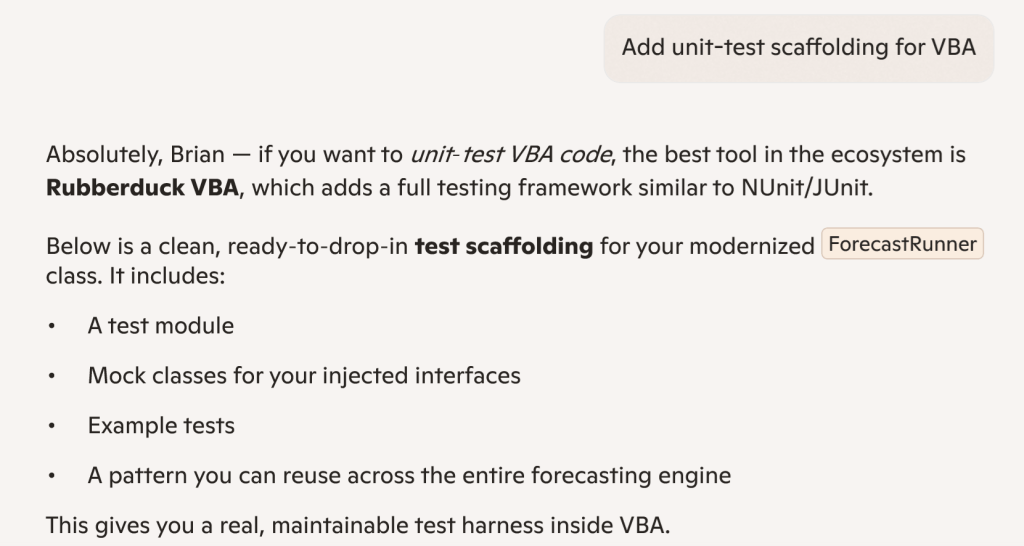




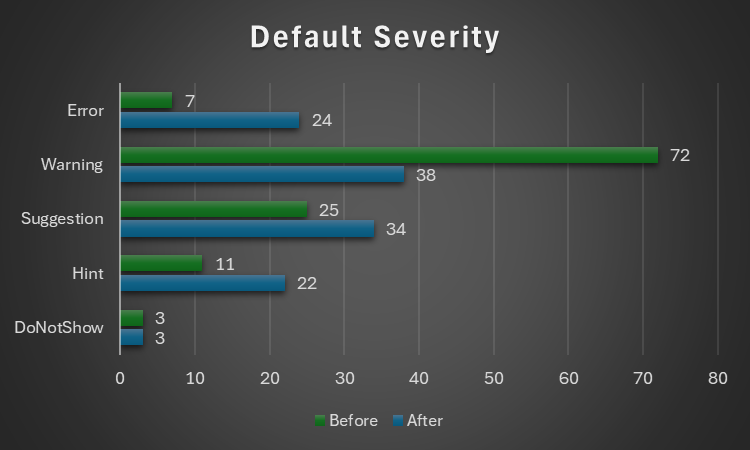
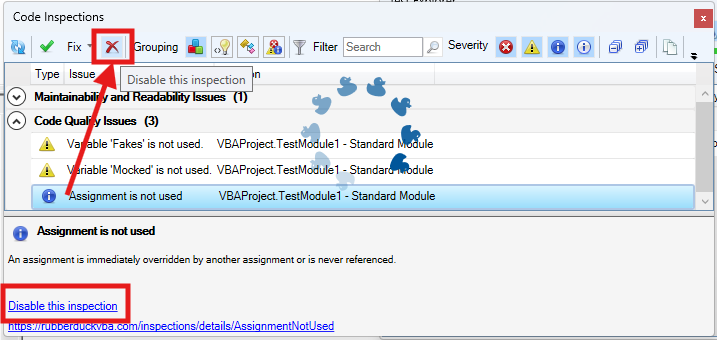


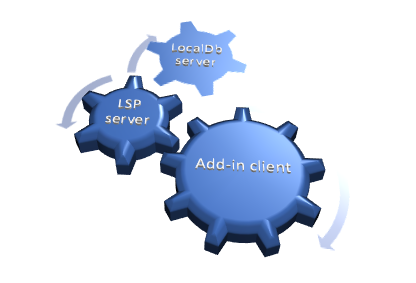


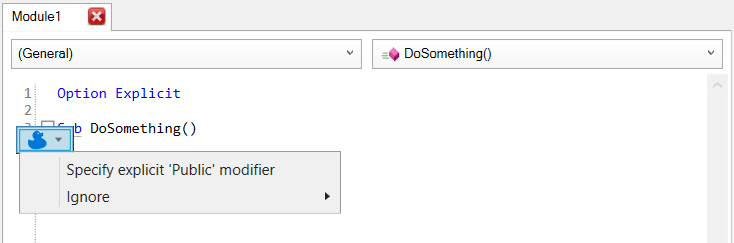


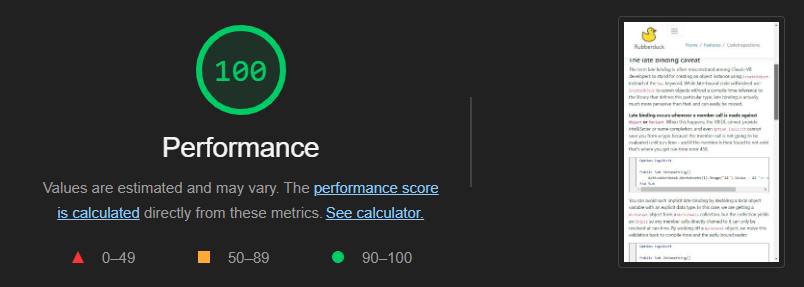
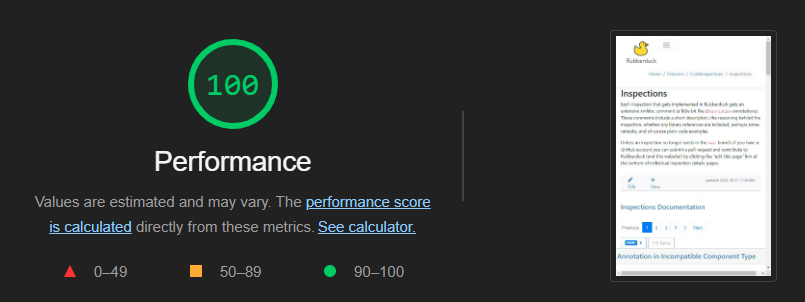
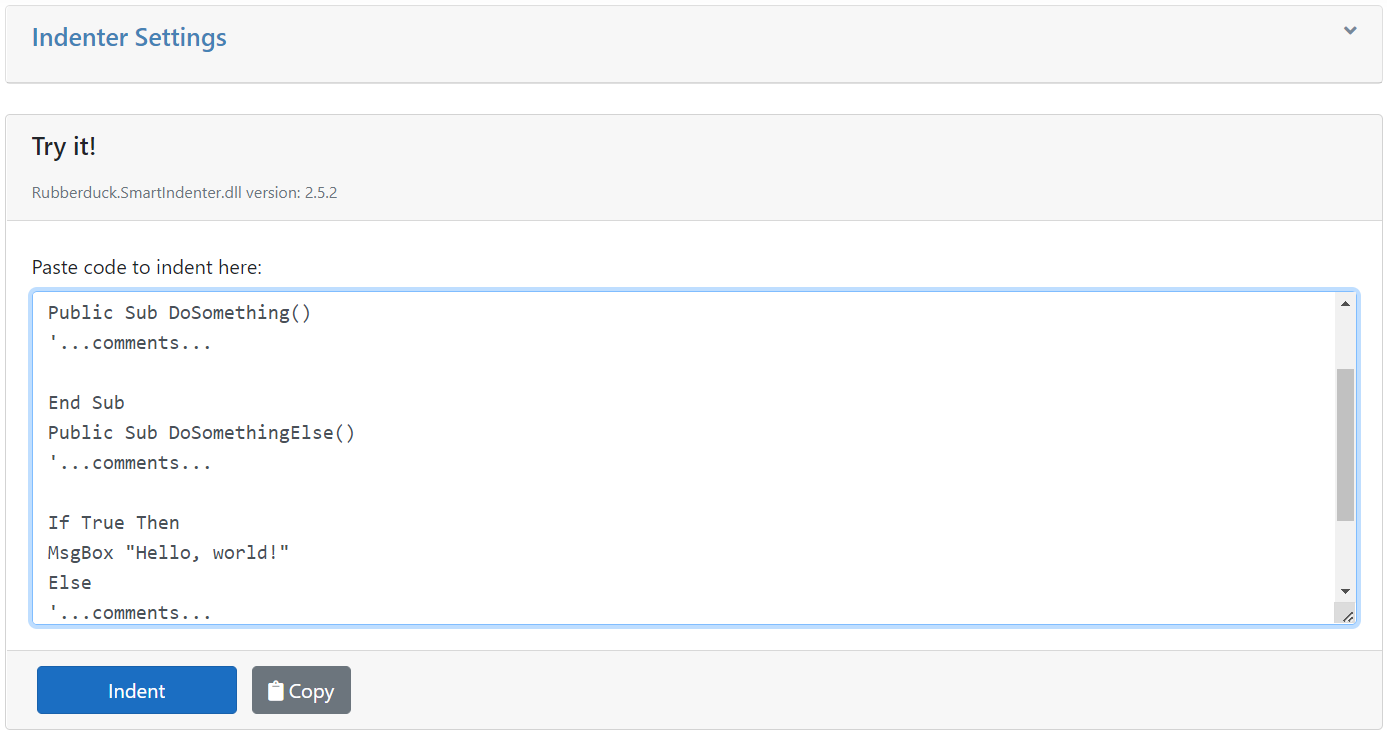


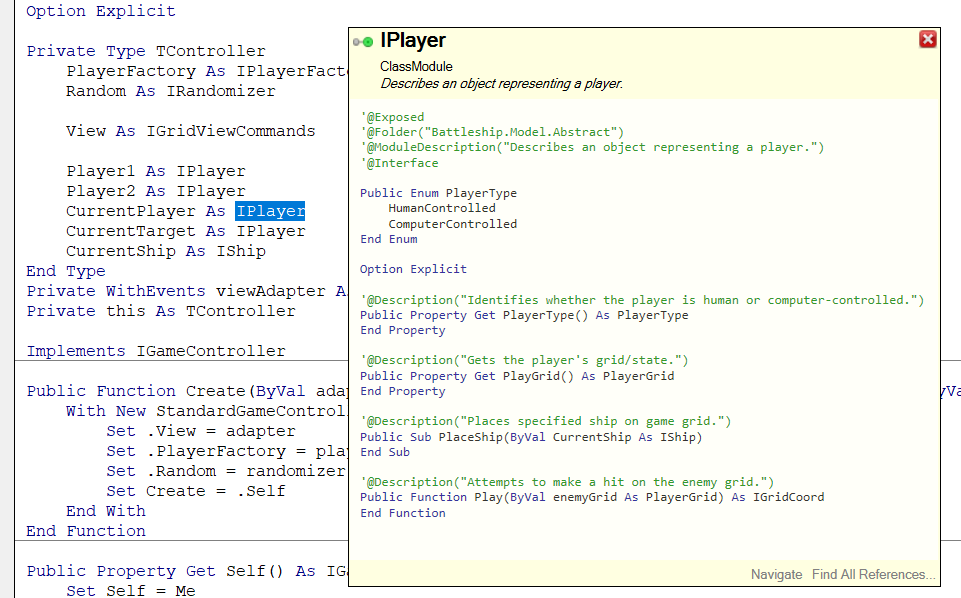
 Rubberduck News